I’ve been driving electric vehicles for eight years now. When I first made the switch, I treated the dashboard’s range estimate—the 'guess-o-meter'—as gospel. If the screen said 200 miles, I genuinely believed I could drive 200 miles. I was wrong, of course. I spent my first winter shivering in a cold cabin on the M25 because I didn't want to switch on the heater and watch that digital range plummet.
After nearly a decade behind the wheel of various EVs, I’ve learned that a manufacturer’s official WLTP figure is essentially a fairy tale told in a laboratory. Real-world EV range accuracy isn’t about what the brochure claims; it’s about understanding how your specific driving habits, the weather, and—crucially—the state of traffic interact with your battery chemistry.
The Guess-O-Meter: Why It’s Usually Wrong
Every EV calculates your remaining range differently, but they all share one fatal flaw: they are too optimistic. The car’s computer looks at your recent energy consumption (kWh/mile) and projects it forward. If you’ve been coasting downhill on an A-road for twenty minutes, the computer thinks you’re a hypermiling genius and inflates your estimated range accordingly. Then, you hit stop-start traffic, turn on the air conditioning, and that 50-mile estimate vanishes in 20 miles.
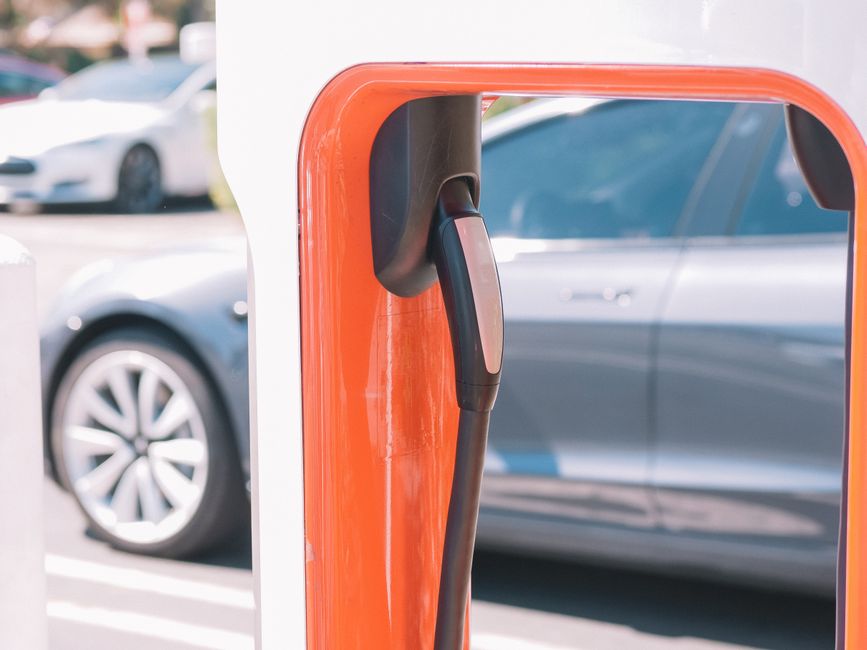
This is where the real-time range estimate often fails the driver. It provides a feedback loop that reacts too late. By the time the dashboard admits your range is shrinking, you are already committed to a route that might not have a reliable charger. This isn't just a tech glitch; it’s a design oversight that forces drivers into unnecessary anxiety.
The Traffic Impact on Range: It’s Not What You Think
There is a persistent myth that traffic kills EV range. In reality, it’s more nuanced. If you are stuck in heavy, slow-moving urban congestion, your EV is actually in its element. Regenerative braking captures energy every time you crawl forward, and you aren’t battling air resistance—the biggest killer of EV efficiency.
Driving Condition Range Impact Why? Highway (70mph+) High negative impact Exponential increase in drag Stop-Start Urban Traffic Neutral to positive High regen potential, low drag Cold Weather + Traffic High negative impact Battery heating vs. cabin heating loadThe real traffic impact on range comes down to the "thermal load." When you are sitting in a jam for an hour, your battery is still powering the heater or air conditioning, the infotainment system, and the seat warmers. You are consuming energy while covering zero distance. That is where you see the "range drop" happen in real-time, even if your efficiency per mile looks decent on paper.
Risk vs. Reward: The Reality of Modern Planning
I view driving an EV as a series of risk vs. reward calculations. The reward is a quiet, smooth, and cheap commute. The risk is the 'avoidable hassle' of finding out the only charger at your destination is out of service. To mitigate this, I’ve stopped trusting the car’s dashboard entirely.
Instead, I use tools like Zap-Map. It’s my primary sanity check. If I’m heading to a client meeting in a city I don’t visit often, I don’t look at the car’s range estimate. I look at Zap-Map to see the real-time status of the local charging infrastructure. If I know there are three working rapid chargers within a two-mile radius of my destination, I don't care if the car tells me I have 10 miles or 50 miles of range left. I’ve offloaded the risk to a reliable data source.
Finding the "Real" Data: The Community Feedback Loop
Manufacturer claims are marketing fluff. To get the truth, I look for community-driven data. I spend a lot of time on forums and the Disqus comment sections attached to major motoring outlets. When someone complains about their specific evpowered.co.uk EV model dropping range in sub-zero traffic, I listen. That is high-fidelity, real-world data.
If you want to know how accurate your range estimate is, you need to cultivate your own feedback loop:
Track your own kWh/mile: Forget the range display. Watch the efficiency display. It tells you exactly how much energy you are burning. The "10% Rule": In traffic, never trust the last 10% of your battery. If the car says you have 15 miles left, act as if you have five. Check the ambient temperature: If it’s below 5°C, your range estimate is essentially a suggestion, not a fact. Adjust your mental budget by 20% immediately.Avoidable Hassles: Why Preparation Beats Prediction
I’ve had my fair share of close calls. Most were entirely avoidable. The biggest mistake drivers make is relying on the car's built-in navigation to manage the battery. These systems are often outdated and rarely account for real-time traffic jams or sudden changes in weather.
Three Golden Rules for EV Drivers:
- Don't trust the dash on a motorway: At 70mph, the car cannot calculate for wind resistance changes. If the wind changes, your range changes. Pre-condition the cabin: If your car is plugged in at home, heat the cabin before you leave. Doing this while drawing power from the wall saves massive amounts of battery capacity that would otherwise be wasted in morning traffic. Check the charger status before arrival: Use apps that show live status updates. Don't be the person who arrives at a charger only to find the unit has been 'offline' for three days according to recent community reports.
The Verdict: Stop Obsessing Over the Number
After 8 years, my advice is simple: stop obsessing over the range estimate on your dashboard. It is a mathematical model based on past performance, not a prophecy of the future. The real-world range of your EV is a fluid variable. It shifts every time you press the accelerator, every time you switch on the heater, and every time the traffic slows to a crawl.
Embrace the tools available. Use Zap-Map to manage your stops, and use community platforms like Disqus to learn the quirks of your specific model from people who actually drive them. When you stop treating the dashboard like an oracle and start treating your energy consumption as a managed resource, the "anxiety" disappears. You aren't losing range; you're just learning how the machine works.
Driving an EV is a data-driven experience. Once you accept that the car’s estimate is just a rough guide, you can start making smarter, more practical decisions. And honestly? That’s the only way to drive.
