In today’s dynamic business environment, stress testing and evaluating alternative scenarios using AI has become a vital part of strategic planning, risk management, and innovation. Yet, many teams face the challenge of getting one-sided, overly optimistic, or unverified AI-generated outputs that lack auditability, defensibility, and balanced viewpoints.
This article explores how to leverage recent advances in AI technologies and methodologies—such as multi-model orchestration layers, sequential prompt chaining, and model debate—to rigorously test scenarios without falling into the trap of surface-level, biased, or invented claims. Along the way, we’ll reference tools and companies like Suprmind (suprmind.ai) and large language model innovations like Claude to illustrate practical frameworks that improve transparency, traceability, and decision confidence.
Why One-Sided AI Answers Are Risky
Before diving into solutions, it’s crucial to understand why one-sided AI responses occur and what risks they pose in scenario analysis and stress testing:
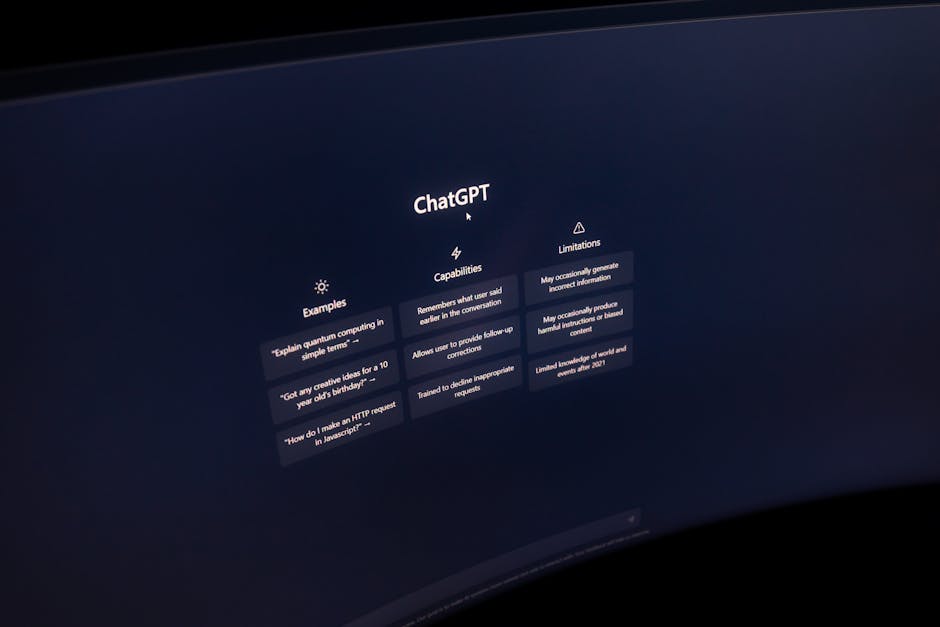
- Echo chamber effect: A single AI model trained on similar data tends to produce consistent but narrow perspectives. Lack of verification: AI may "hallucinate" data points such as pricing, customer logos, certifications, or performance benchmarks that don't exist. Insufficient audit trails: Outputs often lack explanations or references, making them difficult to scrutinize or defend during reviews. Absence of structured disagreement: Without mechanisms to compare alternatives or challenge assumptions, users get false confidence in one narrative.
These issues can lead to strategic missteps, misleading investor communications, and regulatory scrutiny. Addressing them requires a combination of process design and tooling innovation.
Key Principles for Testing Alternative Scenarios with AI
To avoid one-sided answers, successful AI-based scenario testing should be built on four foundational pillars:
Auditability and Defensible Process: Every AI output should be traceable to inputs, assumptions, and intermediate steps to withstand external scrutiny. Sequential Prompt Chaining: Structuring prompts in a step-wise manner reduces error propagation and clarifies where assumptions impact outcomes. Multi-Model Orchestration in Parallel: Leveraging different AI models concurrently provides diverse perspectives and helps flag outlier conclusions. Disagreement as a Decision Signal: Purposefully comparing conflicting model outputs or scenario results sharpens analysis and highlights risk heatmaps.Sequential Prompt Chaining: Step A, Step B, Step C
One critical technique to safeguard against bias and hidden errors is sequential prompt chaining. Rather than throwing a complex question at an AI in one go, this method breaks down the process into logical steps. This helps pinpoint where assumptions or errors emerge and improves transparency.
Here’s a simple example of a three-step chain to stress test product pricing scenarios:
Step A: Request a detailed summary of current market pricing benchmarks for a specified product category, citing sources or data types. Step B: Based on Step A, generate competitive pricing models under various market conditions (e.g., supply chain disruption, competitor entry). Step C: Analyze the financial impact of each pricing model on profitability, referencing earlier benchmarks and assumptions explicitly.Using this approach, inconsistencies or invented data points become clearer. For example, if Step A fails to return verifiable market benchmarks, any subsequent pricing analysis must be questioned or re-run with adjustments.
Multi-Model Orchestration Layer: Parallel Perspectives
Complementing sequential logic is the use of multi-model orchestration layers, as championed by companies like Suprmind at suprmind.ai. This approach runs multiple AI models side by garrettwigp625.tearosediner.net side, managing inputs and aggregating outputs to glean richer insights.
Why is this powerful?
- Diversity of Thought: Different models, such as Claude or GPT-based variants, have unique knowledge representations and reasoning patterns. Cross-comparing their outputs reduces blind spots. Error Detection: If one model outputs a dramatically divergent scenario or questionable data, the orchestration layer flags it as a loud risk to be investigated. Efficiency: Automation of prompt dispatching and reconciliation saves time and prevents manual copy-paste errors.
The orchestration layer also supports configurable workflows to balance sequential chaining with parallel checks, ensuring you never rely solely on one AI “voice.”
Disagreement as a Decision Signal: Model Debate
Systematically encouraging AI “model debate” may sound counterintuitive, but disagreements between models are often goldmines of insight.
Ask yourself this: for example, when testing a strategic investment scenario, one model may highlight optimistic growth forecasts while another signals potential regulatory headwinds or cost overruns.
Rather than dismissing these discrepancies, treat them as decision signals that warrant:
- Further investigation: Validate which assumptions differ and why. Risk layering: Use contradictions to develop stress scenarios, covering best case, worst case, and middle ground. Enhanced communication: Document divergent viewpoints to provide balanced narratives for boards and auditors.
Best Practice: Do Not Invent Data
A frequent and tempting pitfall is to allow or even rely on AI to generate invented pricing figures, customer logos, certifications, or performance benchmarks. This is a quiet risk that inevitably surfaces during external audits or investor due diligence.
Instead:
- Always request sources or proxies for any factual or performance claims. Cross-validate AI-generated numbers against known historical data or third-party research. Use transparent placeholders or clearly state assumptions when data is unavailable rather than fabricating.
Suprmind’s platform, for instance, enforces traceability by logging prompt inputs and outputs alongside confidence levels, allowing rapid backtracking during reviews.
Summary Table: Recommended Workflow to Test Alternative Scenarios with AI
Step Purpose Technique Notes 1 Establish Baseline Data Sequential Prompt Chaining (Step A) Verify sources to prevent invented data; document inputs for audit 2 Generate Alternative Scenarios Sequential Prompt Chaining (Step B) Explicitly state assumptions; produce variants with clear triggers 3 Analyze Financial/Operational Impact Sequential Prompt Chaining (Step C) Back-reference to Step A & B; flag infeasible or inconsistent results 4 Compare Model Outputs Multi-Model Orchestration Layer (e.g., Suprmind + Claude) Detect outliers; highlight disagreements as risk signals 5 Refine and Document Decisions Model Debate & Decision Signaling Capture rationale & differing views for transparency and complianceFinal Thoughts
AI-powered testing of alternative scenarios is no longer a speculative exercise but a critical capability for enterprises aiming to navigate uncertainty with confidence. By embedding auditability, leveraging sequential prompt chaining, orchestrating diverse AI models in parallel, and embracing disagreement as a healthy part of the decision process, teams can avoid one-sided answers that mask underlying risks.
Organizations that utilize platforms like Suprmind alongside models like Claude position themselves to deliver defensible, transparent, and rigorously challenged scenario analyses. This not only satisfies auditors and regulators but provides superior intelligence to boards and investors.

Remember always to ask: “Where did that number come from?”—and ensure your AI tools provide answers backed by traceable data, not hand-wavy claims or fabricated details. With disciplined processes and the right AI orchestration, alternative scenario testing can become a strategic advantage rather than a compliance headache.