I spent four years in the trenches of telecom fraud operations. I've seen this play out countless times: made a mistake that cost them thousands.. Back then, we fought vishing (voice phishing) using caller ID validation and pattern recognition. We looked for the telltale signs of a scammer: the rhythm of a scripted call, the jitter of a VoIP trunk, or the background hum of a boiler room in a specific time zone. Today, that playbook is obsolete. The adversary has moved from hiring actors to leveraging generative AI.
According to McKinsey 2024, over 40% of organizations encountered at least one AI-generated audio attack or scam in the past year. This isn't science fiction, and it isn't limited to high-profile political deepfakes. It is happening in your procurement departments, your accounts payable teams, and your executive suites.
Attackers no longer need the hours of clean, studio-quality speech that defined the early days of synthetic media. Today, they only need a few minutes of audio to build a convincing model. Let’s strip away the marketing fluff and look at how this happens—and why you should be skeptical of the "miracle" detection tools currently flooding your inbox.
How We Got Here: The Efficiency of Modern Voice Cloning
Voice cloning relies on neural text-to-speech (TTS) architectures. In the past, you needed significant compute power and massive datasets to train a model. Modern architectures, such as those utilizing Variational Autoencoders (VAEs) or Diffusion-based models, have radically shifted this landscape.
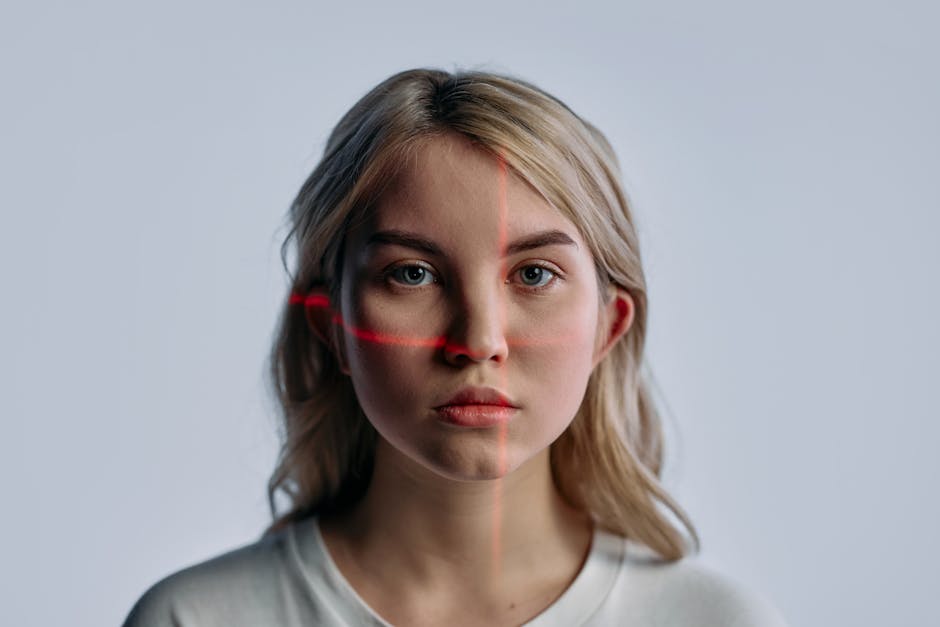
When an attacker targets an executive, they don't need a perfect replica; they need a "good enough" replica to fool a stressed employee during a mid-day call. They scrape public appearances, earnings calls, or social media clips to gather their training data. Because modern models use transfer learning—starting with a base model trained on thousands of hours of general speech—they only require a few minutes of audio from the target to "fine-tune" the nuances, intonation, and pitch.
The model learns the target's latent features. Once it understands how that specific individual transitions between phonemes, it can synthesize arbitrary text. The result is a high-fidelity clone that sounds strikingly human.
The Detection Landscape: What Are You Actually Buying?
If your vendor tells you they have a "99% accuracy" detection rate, stop them right there. Accuracy is meaningless without context. Does that rate hold up against a clean WAV file, or does it collapse when the audio has been transcoded through three different VoIP gateways?
I categorize detection tools into five main buckets. Each has unique risks regarding the "where does the audio go" question—a question I ask every vendor during a procurement review.
Category Methodology Primary Risk Latency API/Cloud SaaS Server-side neural analysis Data privacy/Audio leakage High Browser Extension In-browser inference Performance overhead Medium On-Device/Client Local neural engine Heavy hardware usage Very Low On-Prem Appliance Dedicated server/gateway High CapEx/Maintenance Low Forensic Platforms Offline spectral analysis Not real-time N/AThe "Where Does the Audio Go" Problem
If you use an API-based detection platform, you are essentially shipping your employees’ and clients' audio data to a third party. If that company is breached, your internal communications become the next training set for an attacker. Before you onboard any tool, demand to know their data retention policy. Are they training their models on your audio? If they are, you are paying them to help hackers improve their future attacks.
The Myth of "Perfect Detection"
I hate marketing claims that ignore reality. You will see vendors claim their "AI detects 100% of deepfakes." That is a lie. Detection is an arms race. When detectors look for specific artifacts—like high-frequency anomalies or phase inconsistencies—the generative models simply adapt to smooth those over.
Detection tools usually fall into one of two camps:
- Artifact-based detectors: They look for the "scars" left by the synthesis process. These are effective until the adversary changes their synthesis model. Prosody/Context-based detectors: These analyze the emotion and flow of the speech. These are harder to bypass but prone to high false-positive rates when people are nervous or speaking in a second language.
Accuracy claims must state the conditions. An accuracy rate of 95% on a high-bitrate studio recording is worthless if that same detector drops to 40% on an audio clip compressed by Zoom or a cellular network.

My Checklist: Why "Bad Audio" Ruins Everything
In fraud ops, the most dangerous audio is the "dirty" audio. Attackers love it. Why? Because the noise floor hides the synthesis artifacts that detectors look for. When you evaluate a tool, test it against these real-world edge cases:
Codec Compression: Transcode the audio through G.711 (standard phone line) and Opus (VoIP). Does the tool still catch the clone? Background Noise: Overlay white noise, keyboard clatter, and office chatter. If the detector fails, it's useless for enterprise IR. The "Human" Factor: Test it against a real person trying to mimic a voice. Many detectors are calibrated specifically for AI and will produce false negatives on a skilled human impersonator. Spectral Clipping: Does the tool account for audio that has been clipped or distorted by low-end hardware?Real-Time vs. Batch Analysis
We need to distinguish between preventative and investigative tools.
Real-time analysis is the "Holy Grail," but it is computationally https://instaquoteapp.com/background-noise-and-audio-compression-will-your-deepfake-detector-fail/ expensive and difficult to integrate into standard enterprise phone systems. To perform real-time analysis, you must perform inference on the fly. This introduces latency—the dreaded "long pause" that tips off the attacker that you click here are monitoring the call.
Batch analysis, conversely, is for post-mortem forensics. If an employee reports a suspicious request, you run the recording through a deep forensic platform. This is more accurate because you can perform deeper spectral and phase analysis without the constraints of real-time processing. For most mid-sized fintechs, a hybrid approach is the only sensible path forward: blocking known bad signatures in real-time, and using deep analysis for post-event verification.
Conclusion: Skepticism is Your Best Security Control
Stop looking for a "set it and forget it" tool. If you tell your employees to "just trust the AI" to filter out deepfakes, you are inviting disaster. AI is not a magic shield; it is a probability machine. . Pretty simple.
The solution is not just better tooling, but better behavioral security. Teach your finance team that no voice—no matter how convincing—should ever authorize an emergency wire transfer. Even if the voice sounds like the CEO, the *process* should remain the ultimate detector. If the voice on the other end is pushing for urgency, bypass, or secrecy, the AI has already failed. You don't need a detector for that; you need a culture of verification.
The attackers have the technology. They have the models. But they don't have your internal processes—unless you give them away. Keep your audio close, your skepticism high, and never trust a vendor who refuses to tell you exactly where their processing happens.